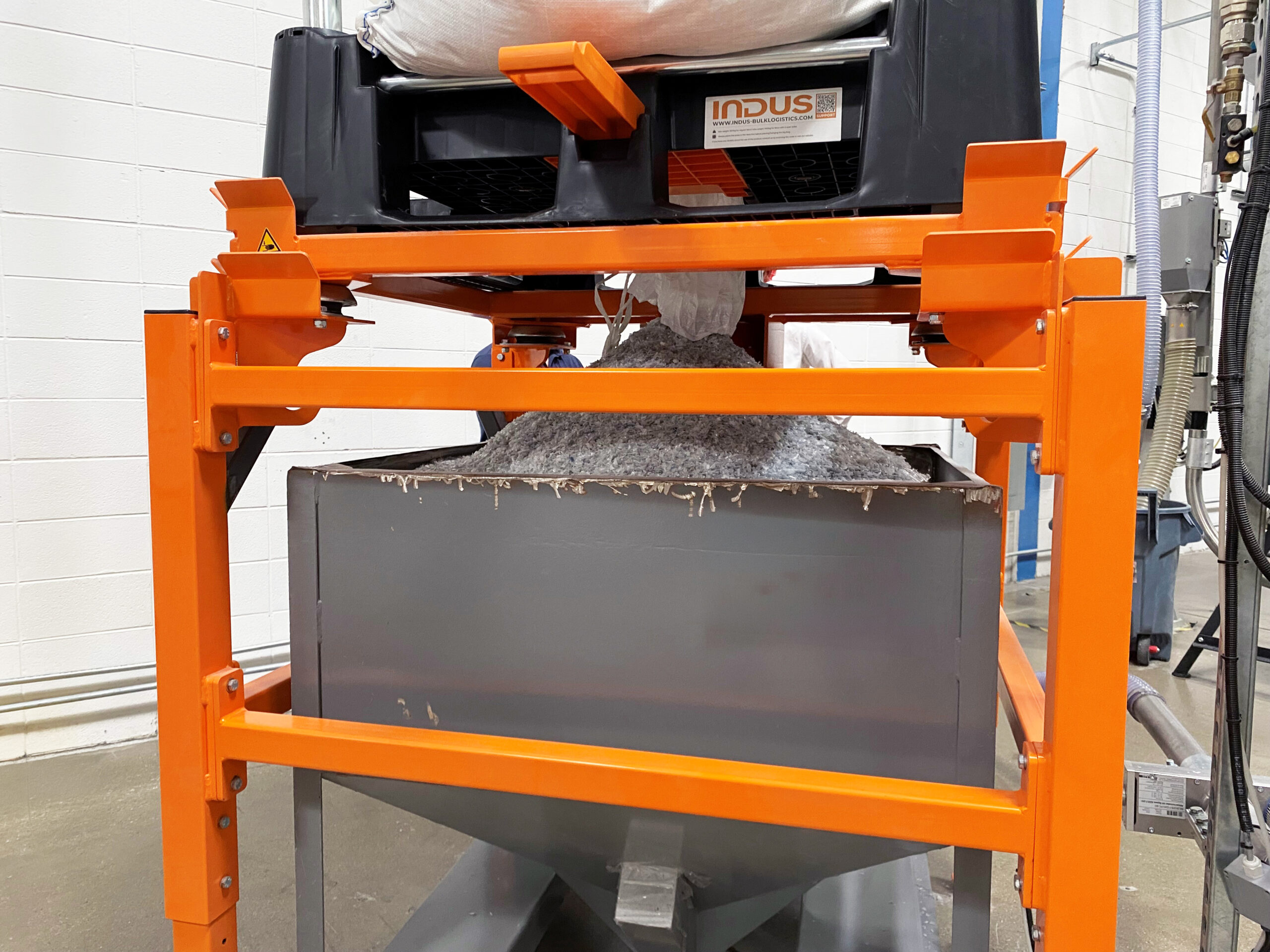
Efficient bulk material handling depends on reliable material flow. When powders, flakes or other difficult-flowing materials are supplied in Big Bags, unloading can quickly become a bottleneck in production.
Empty Difficult Powders from Big Bags
Powders, flakes and other difficult-flowing materials do not always behave as expected inside a big bag. Material can compact during storage and transport, form bridges above the outlet or remain trapped in the corners of the bag.
The result is familiar to many process engineers: operators manually pushing or hitting the big bag, inconsistent material supply and valuable product remaining inside the FIBC.
A big bag unloading station for powder with controlled vibration and, for more difficult materials, pneumatic Bag Activators provides another way to solve this problem.
Why powders and flakes get stuck in big bags
Unlike free-flowing pellets or granules, powders and irregular materials can compact or interlock. This is particularly relevant for materials such as:
- powders and dry chemical additives;
- PET flakes and post-consumer bottle flakes;
- recycled plastic flakes and regrind;
- irregular materials such as plastic bottle caps;
- dry food ingredients such as spices and seasoning powders.
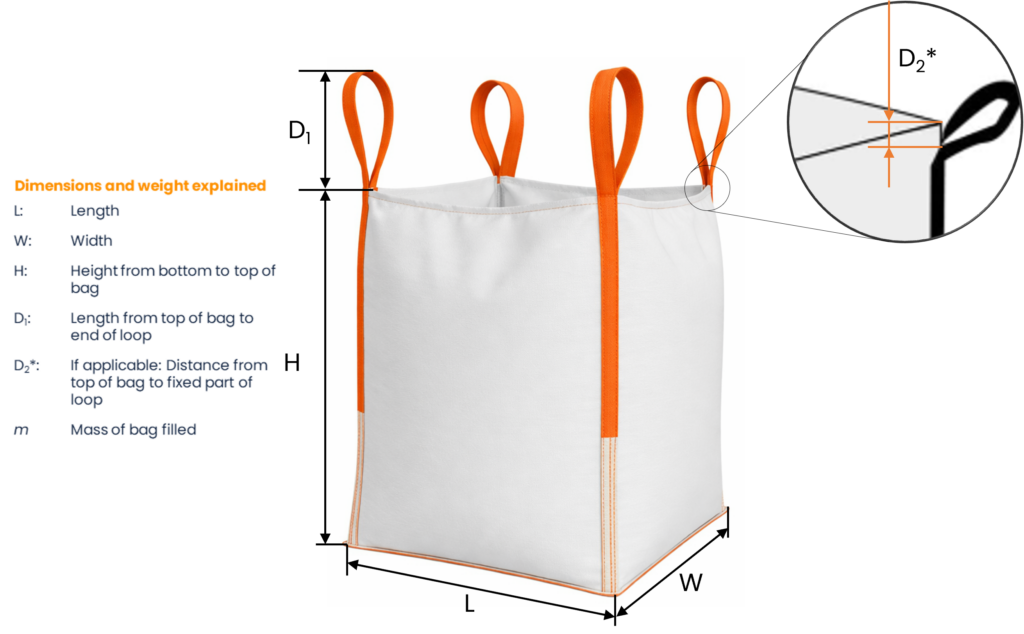
The behaviour differs per product. Particle size, moisture, bulk density, compaction, big bag geometry and outlet design can all influence discharge.
That is why there is no single unloading method that works equally well for every dry bulk material.
Vibration or Bag Activators: what does your material need?
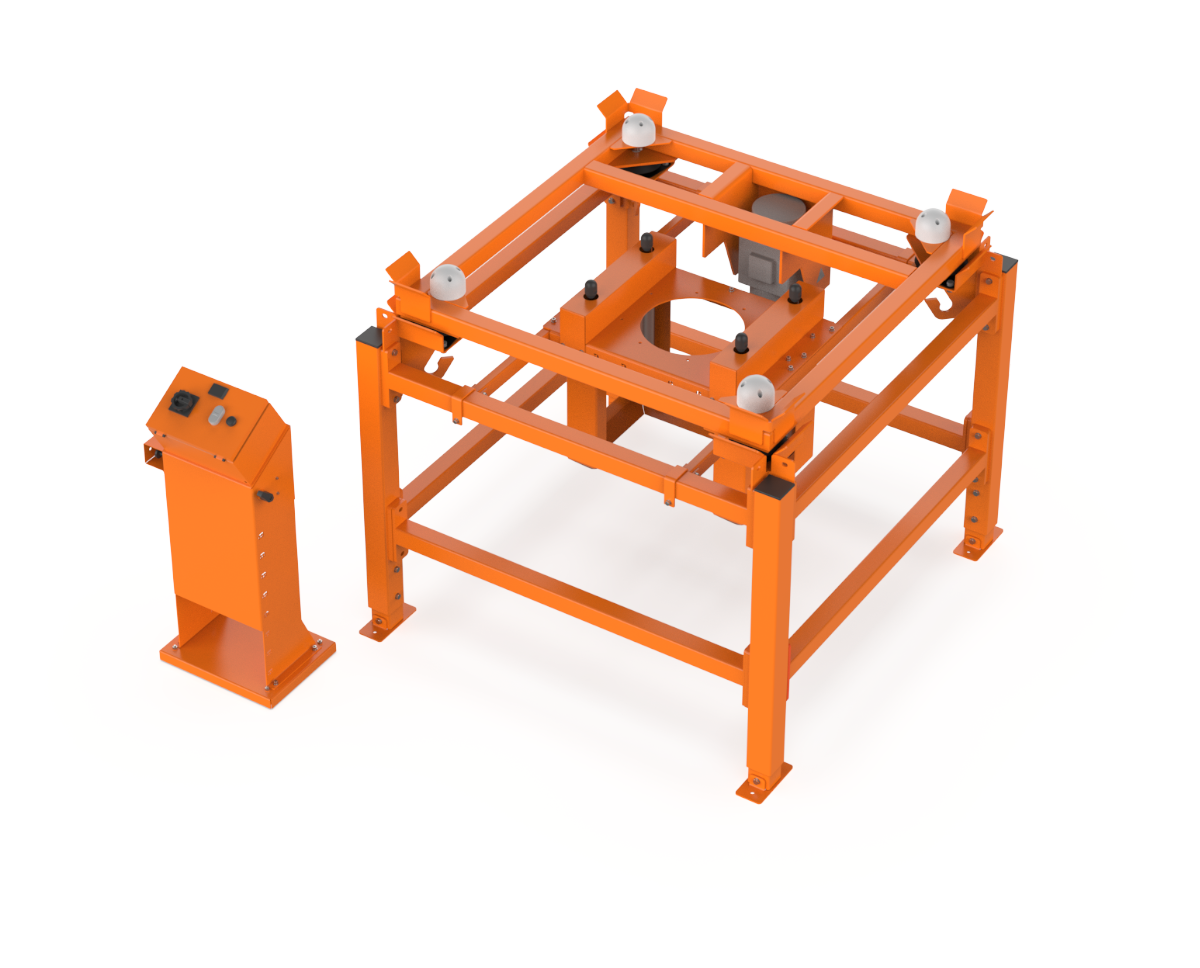
The Indus Big Bag Unloading Station can be configured with a vibrating platform specifically for difficult-flowing powders and flakes. Indus positions this configuration as a lower-height alternative to conventional hanging big bag frames.
For medium-flowing materials, vibration is often sufficient. A vibration motor transfers controlled movement through the platform into the big bag system, helping compacted material move towards the outlet.
More difficult powders may require additional mechanical action. In that case, four pneumatic Bag Activators push against the bottom of the big bag. The combination of vibration and repeated bag activation helps break bridges and moves material towards the discharge spout. Indus also uses this combined configuration for difficult-flowing materials in its production solutions.
In practical Indus tests, difficult powders have been emptied in up to approximately 20 minutes with the combined configuration. This should not be regarded as a guaranteed cycle time: actual discharge performance depends strongly on the material and big bag.
How does the NEVA unloading process work?
The NEVA concept allows the same big bag to remain supported during storage, internal transport and unloading. The NEVA Big Bag Carrier can subsequently be positioned directly on the unloading station with a forklift.
The unloading sequence is straightforward:
- Place the filled big bag inside the NEVA Big Bag Carrier.
- Position the complete system on the unloading station with a forklift.
- Access the discharge spout through the opening in the NEVA deck.
- Release the first of the two outlet ties and pull the spout through the deck.
- Secure the spout to the receiving pipe or downstream process connection.
- Only then release the second tie and start discharging.
- Activate vibration when material flow decreases.
- For difficult powders, activate the pneumatic Bag Activators to massage and reshape the lower part of the big bag.
Connecting the outlet before fully opening the big bag supports low-dust and controlled discharge. Additional dust-control solutions can be discussed where the process requires further containment.
This means NEVA can support the big bag across receiving, storage, internal transport, production and unloading, rather than being used only at the final discharge point.
A lower-height alternative to traditional discharge stations
Traditional FIBC discharge systems commonly suspend the big bag from a gantry, crane or hoist above the receiving equipment. This can be an effective solution for permanent, highly automated installations, but it also requires sufficient building height and a relatively substantial supporting structure.
The modular Indus approach uses the existing forklift to position the big bag and can therefore be particularly relevant where height, flexibility and capital investment are important.
Depending on the application, advantages include:
- lower working height;
- no overhead crane or hoist required;
- relatively simple installation;
- modular configuration;
- vibration only where required;
- Bag Activators for particularly difficult products;
- potential for further automation using weighing and RFID on station and Neva;
- integration with the same system used for big bag storage and transport.
Technical specifications and investment
The Vibration Station has a maximum load of 1,600 kg and is constructed from coated S235JR structural steel.
| Specification | Vibration Station |
|---|---|
| Length | 1,484 mm |
| Width | 1,380 mm |
| Height | 1,917 mm |
| Maximum load | 1,600 kg |
| Material | Coated S235JR structural steel |
| Certification | CE |
As a general indication, a standard Vibration Station starts at approximately €8,000. A configuration with additional pneumatic Bag Activators is approximately €13,000.
The final investment depends on controls, pneumatic equipment, connections, automation and integration with the customer’s production process.
The system can also be integrated further into a production process, for example by combining vibration and pneumatic activation with engineered controls or downstream process signals.
Safety and application limits
For production environments outside classified ATEX dust zones, the standard Vibration Station provides a cost-effective solution for difficult-flowing powders and flakes.
The European Vibration Station and control panel use a 400 V three-phase electrical connection. Pneumatic Bag Activators additionally require compressed air.
Operation should only be carried out by authorised personnel and the equipment must be isolated from electrical and pneumatic energy before maintenance. Technical drawings, safety documentation and operating manuals are available from Indus on request.
Does it work with your powder? Test it first
The most reliable way to determine whether vibration alone is sufficient, or whether Bag Activators are required, is to test the actual material in the actual big bag.
Indus offers the possibility to perform discharge tests using customer materials and big bags. Depending on the project, testing can take place at Indus or be discussed for the customer’s production site.
The approach is already being used in industry. At Mercury Plastics, NEVA Big Bag Carriers and an unloading station replaced a process based on single-high pallet storage and a large gantry unloading setup. Mercury reports 75% faster Super Sack unloading.
Having trouble emptying powder, PET flakes, regrind or another difficult material from a big bag? Send Indus information about your material, big bag dimensions and current unloading process. We can assess the application and determine whether a vibration test with your own material is the logical next step.