In plastics production, efficiency and continuity are everything. From injection molding to extrusion, your machines should run without interruption, and your operators should focus on adding value rather than moving material around. Yet, in practice, many factories struggle with supply chain complexity and inefficient bulk material handling.
At Indus Bulk Logistics, we visit a wide range of plastics production sites across Europe and North America. What we see, is that the way raw materials enter the production process, directly impacts safety, costs, and output. Whether it’s virgin granulate, regrind, or recycled material, the packaging format – Super Sacks (FIBCs, bulk bags), octabins, or 55 lb bags – often creates bottlenecks.
Based on our experience, here are three of the biggest challenges plastics manufacturers face when it comes to raw material handling:
High Investment Costs in Unloading Systems
Every plastics factory wants to run continuous, automated, and reliable production. But that starts with supply: how are your raw materials delivered to the factory floor?
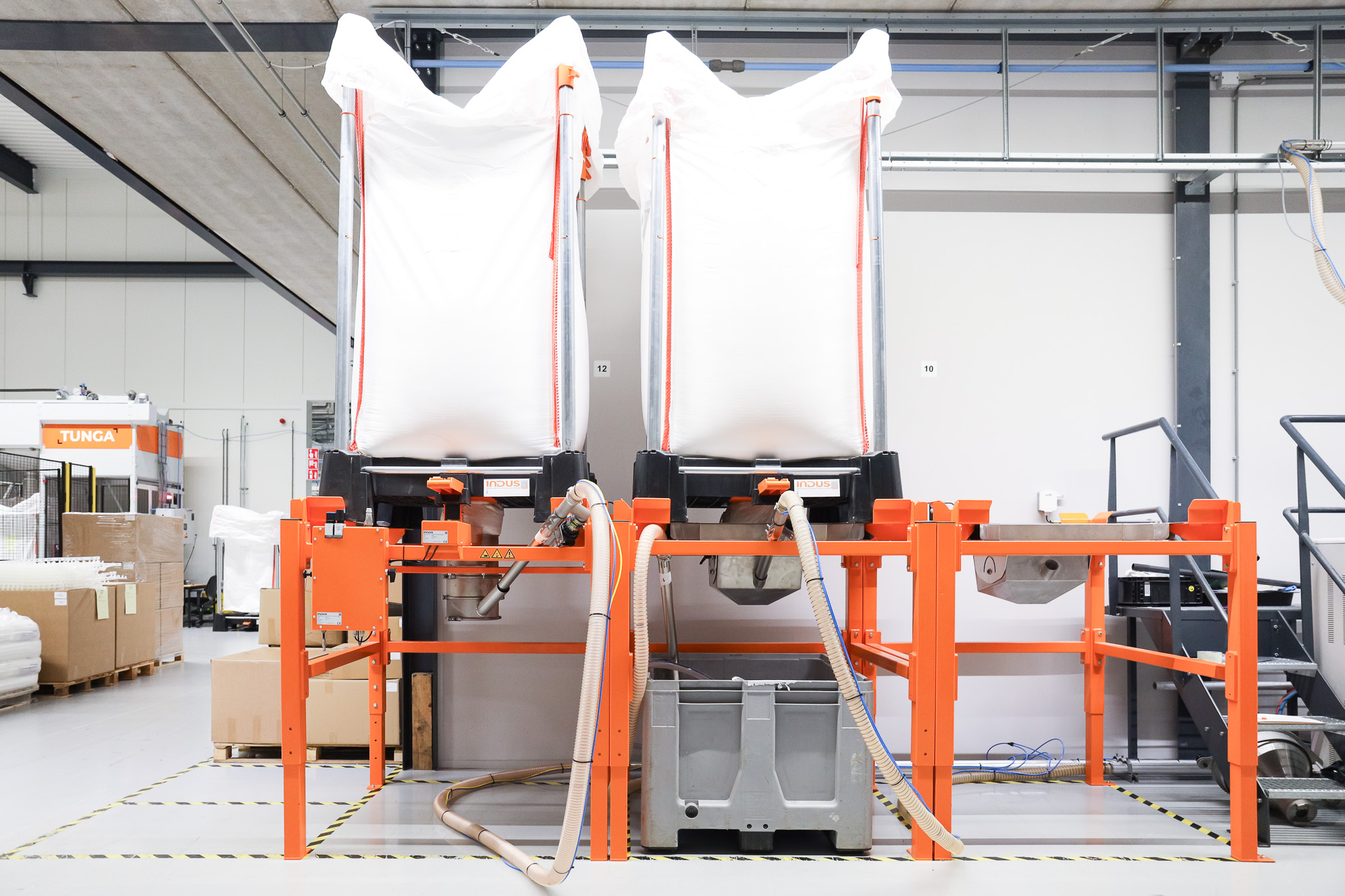
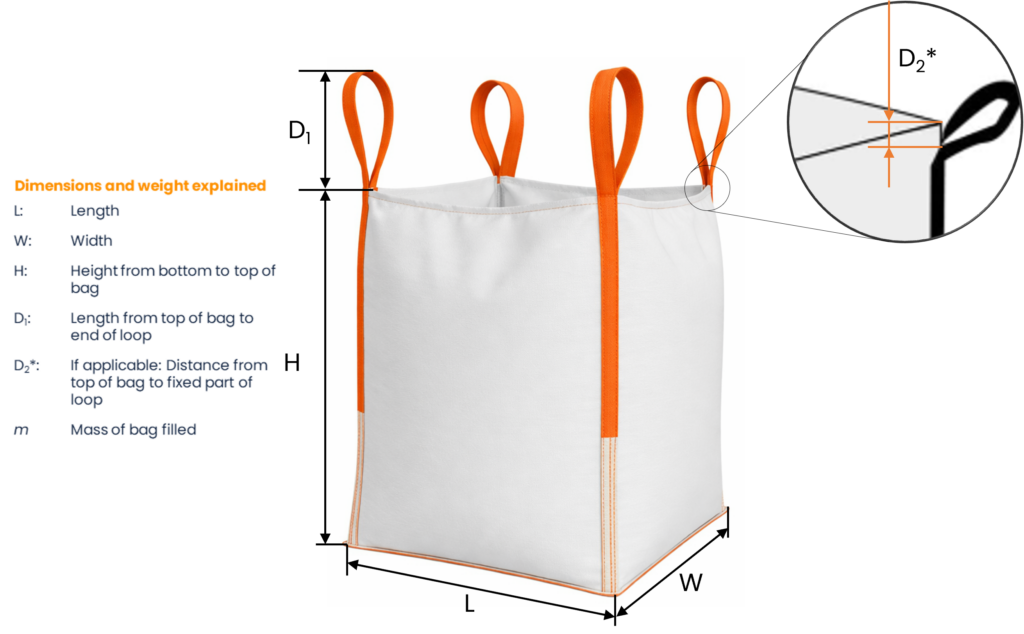
- FIBCs (Super Sacks/bulk bags): Frequently used for regrind or recycled materials. Typically delivered on wooden pallets, they require either storage or direct feeding into production. The problem: emptying them often demands an expensive crane or hoist system. Super Sack unloading stations typically start at $17,000. And that’s before considering space requirements.
- Octabins: While stable for suppliers, octabins are difficult to integrate into a production environment. Emptying often requires vacuum systems from the top, which cost as much as a Super Sack unloading station. They are also not stackable, which creates storage inefficiencies.
- 25kg bags: The standard for virgin polymer materials. Delivered on pallets, they require either manual handling (labor-intensive, unsafe, and costly) or a debagging machine. But these machines typically cost €80,000–90,000. That’s why many companies outsource the repacking to third parties. Adding extra steps, lead times, and costs to the supply chain.
In all three cases, the required investment is high, and the ROI is often unclear. Yet without addressing this, your production team risks higher operating costs, downtime, and limited flexibility.
Excessive Manual Handling
For many plastics manufacturers, automation is simply not in reach, so they resort to manual solutions. But this comes at a cost.
Take repacking, for example: transferring 40 bags of 55 lb bags into one 2,205 lb Super Sack. By hand, this takes at least an hour. That’s an hour of valuable operator time lost, not to mention the physical strain on employees. In most Western European and North American countries, this kind of manual lifting is either heavily restricted or outright prohibited due to health and safety regulations.
Beyond compliance, manual handling creates inconsistency. When operators spend time moving and cutting bags, they’re not monitoring quality, running machines, or improving efficiency. In the long run, this slows down output and increases costs per tonne produced.
Machine Downtime Due to Irregular Supply
Few things are more frustrating for production managers than machines idling due to lack of input. Yet this happens daily in plastics factories:
- Operators don’t load 55 lb bags in time, leaving machines ‘waiting’ for material.
- Vacuum pipes inserted into Super Sacks get misaligned, leaving 220–440 lb of material unused while production is still running.
- Supply interruptions occur because the upstream process of repacking or transferring material is inefficient.
Every minute of downtime translates into delayed orders, frustrated customers, and wasted energy. In high-volume production, this can easily add up to thousands of euros per shift.
Why Super Sacks are the Smarter Choice
While every factory has its own challenges, one trend is clear: Super Sacks (FIBCs) are a more efficient and sustainable option than octabins or manual 55 lb handling.
- Storage efficiency: Octabins are not safely stackable, taking up valuable warehouse space. Super Sacks traditionally had the same limitation, until the Indus Neva Super Sack carrier made stacking possible. Many plastics processors now use this solution to safely store and handle large volumes in a compact footprint.
- Automation potential: By standardizing on Super Sacks, it’s much easier to integrate automated unloading stations into your production process, reducing reliance on manual labor.
- Sustainability: Unlike octabins, Super Sacks can often be reused, reducing packaging waste.
A Breakthrough in 55 lb Bag Handling
Of course, not all materials are delivered in Super Sacks. Virgin polymer often still arrives in 55 lb sacks. That’s why efficiently processing 55 lb bags into Super Sacks is essential for continuous, high-volume production.
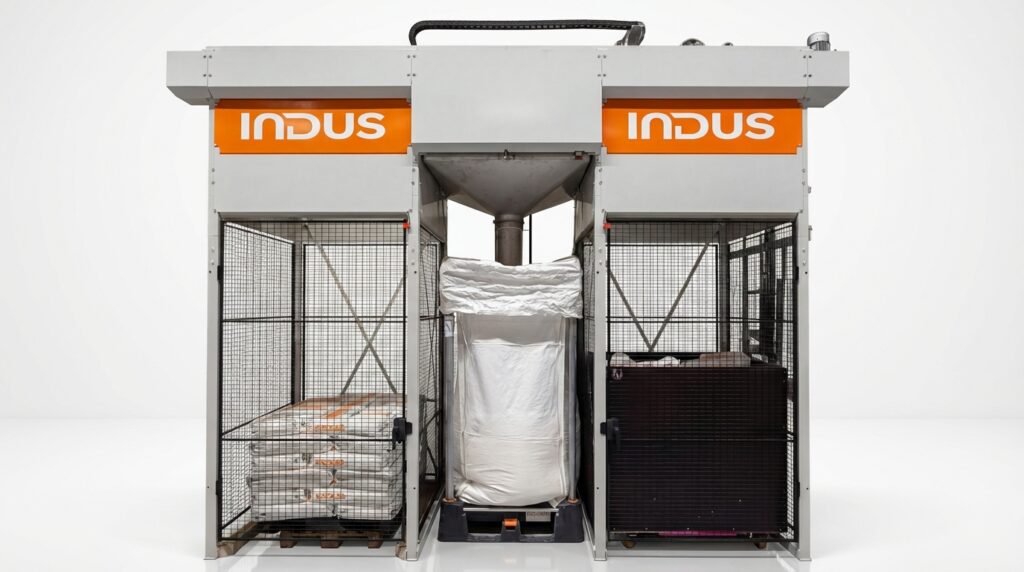
Until now, the high cost of debagging machines has kept many plastics producers from investing. But Indus has developed a new-generation debagging solution that will disrupt the market. With an expected price point 22-33% lower than current machines, this innovation makes automation accessible to a much broader range of plastics processors, from extrusion plants to injection molding facilities.
Building a Flawless Production Chain
By combining FIBCs, the Indus Neva Super Sack carrier, and our unloading stations, plastics manufacturers can achieve a smooth, safe, and cost-efficient material flow:
- Less manual handling
- Lower investment barriers
- Safer working conditions
- Reduced downtime
- More flexible, scalable production
In short: fewer bottlenecks, more output.
Conclusion
Plastics production is competitive, and margins depend on efficiency. By rethinking how raw materials enter your factory, you can unlock major gains in safety, cost, and throughput.
At Indus Bulk Logistics, we help manufacturers across Western Europe and North America transform their bulk material handling. From stackable big bag carriers to affordable debagging solutions, we make continuous production possible.