
The Challenge
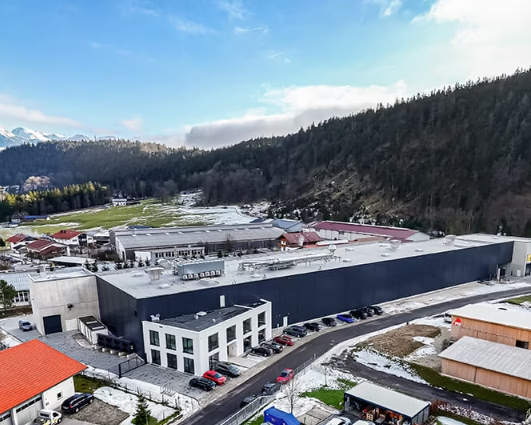
To meet the growing demand while maintaining high standards of quality and traceability, Gustav Heess needed a flexible, scalable, and cost-effective system. Traditional internal silos proved too costly, harder to clean, and lacked efficient material tracking. The goal: continuous 24/7 oil production without compromising on safety, space, or sustainability.
The Indus Solution
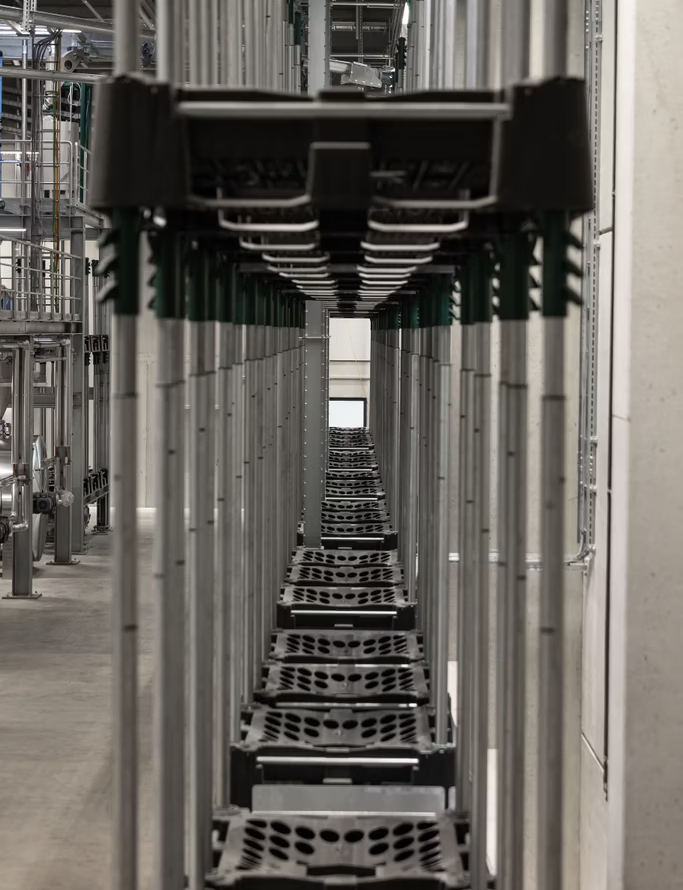
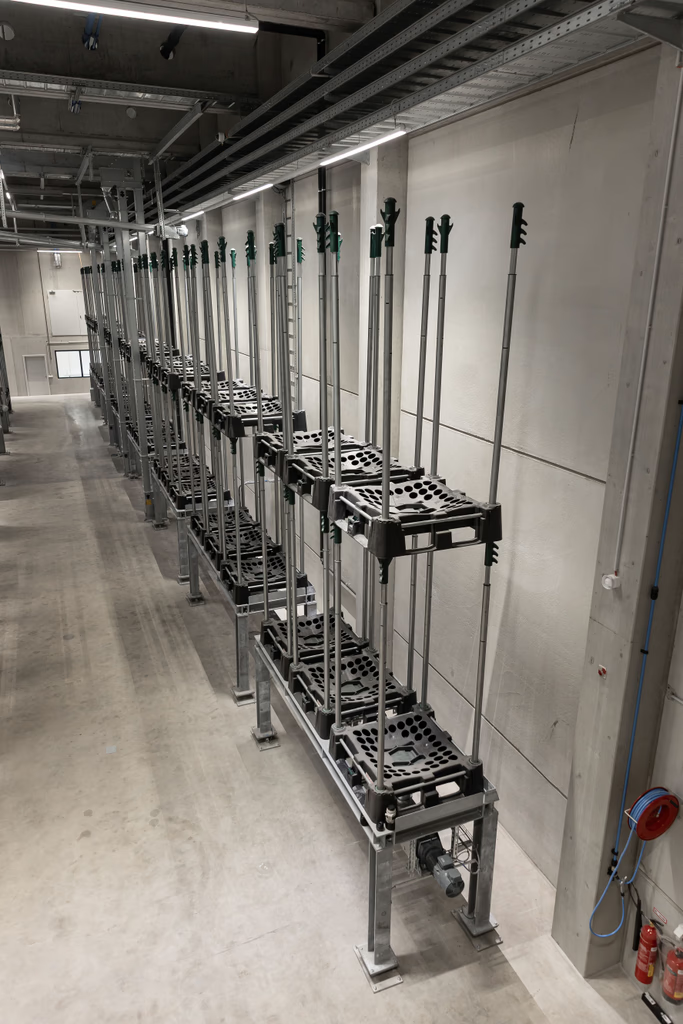
Indus supplied over 100 Super Sack systems, including unloading and filling stations. At the core of the solution is the FlowPole system, designed to keep Super Sacks flowing smoothly – even overnight without manual intervention. The modular design allows two or even three units to be stacked, providing a total capacity of up to 141 ft³ per station and drastically reducing the need for bulky and expensive silos.
The Result
The results from this project with Indus were found in many different areas of the business:
- Ensuring production continuity (100% production time): Due to the unique characteristics of the Flow pole system, the Super Sacks are lifted and keep the nuts flowing, even at night when there is no one around.
- Space optimization (40-60% savings): In production: by using two stacked Super Sack systems, in total 141 ft³, instead of small inside silos. Silos are much more expensive, more difficult to trace materials and have high cleaning costs. In storage: by stacking two or three systems, 40-60% of space is saved.
- Increasing employee safety (100% safety): No Super Sacks can cause an accident when handled correctly with the Indus Super Sack units.
- Improving competitive advantage: With high production volumes and cost-efficient space and product use, Gustav Heess can be a competitive player in the oil production market.
- Increasing re-use and circularity: By using recyclable Super Sacks and making sure the by-products are processed into animal feed and collected into Super Sack systems.