
The Starting Point
Single-High Storage and Slow Gantry Unloading
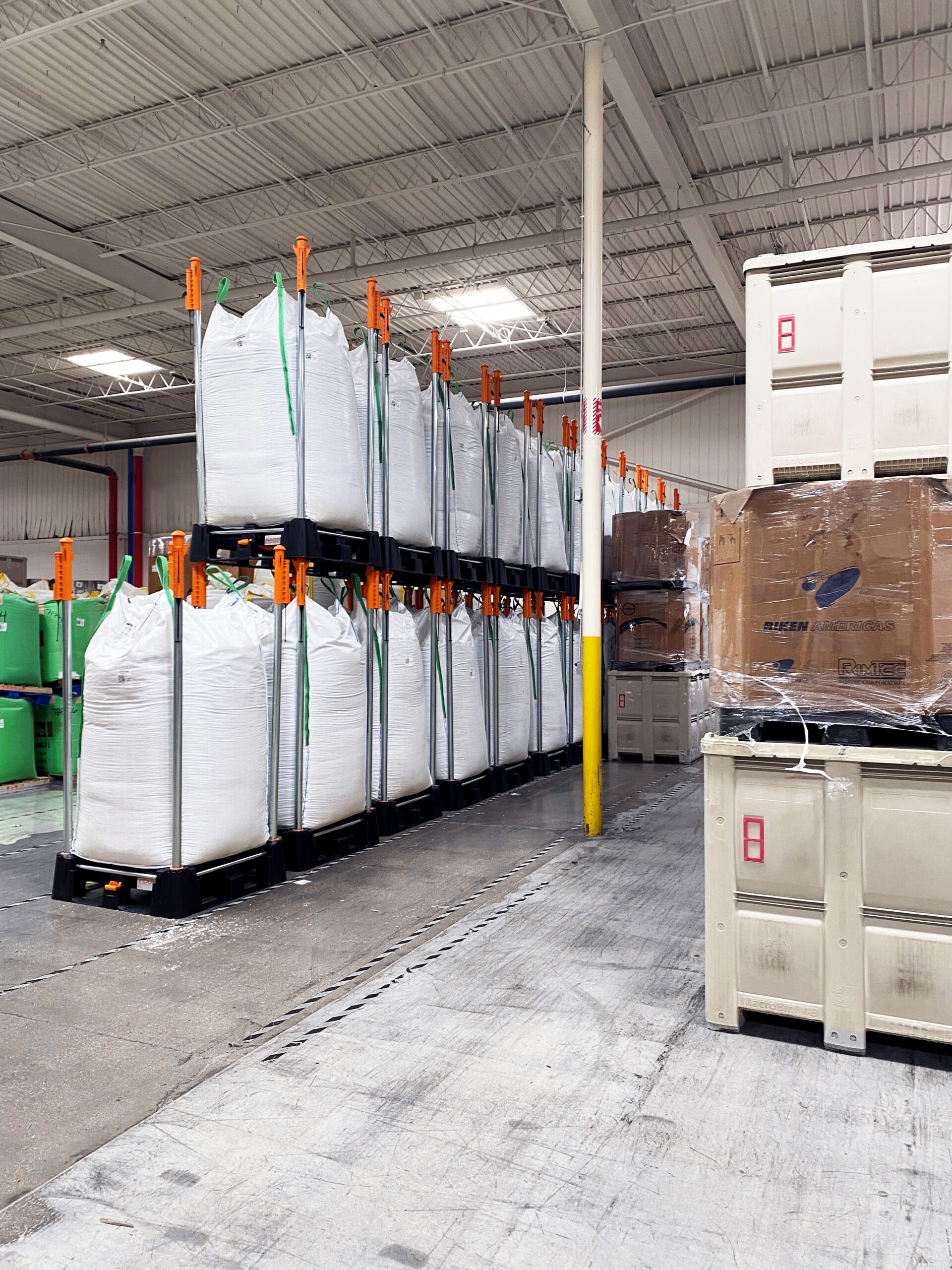
Before implementing the Indus NEVA system, Mercury stored Super Sacks on wooden pallets, single high. Stacking higher was avoided because of the risk of unstable bags, punctures and spills. As a result, valuable warehouse cube space remained unused, while more raw material storage left less space for finished goods and customer orders.
The previous setup used a gantry system: the forklift driver had to hook all four loops, lift the bag with an electric winch, push it into position and untie it before unloading could start. Compared with this “25 foot tall stack of six inch steel,” the NEVA Unloading Station offered a simpler, more intuitive way to unload Super Sacks.
This created several challenges:
- Limited storage capacity for Super Sacks.
- Inefficient use of vertical warehouse space.
- Slow and labour-intensive unloading into production.
- Several manual touches before material could start flowing.
- Operators working close to suspended bags with higher potential energy.
- More pressure to use short-term warehouse leases as volumes increased.
“Single-high Super Sack storage takes up space very quickly. Once the warehouse fills up, the usual answer is to lease more space nearby, but that becomes extremely costly.” Todd Kearns, Plant Manager at Mercury Plastics
Why Mercury Chose Indus
Modular Big Bag Carriers for Storage and Controlled Unloading
Mercury first noticed the NEVA system at K-Fair, Düsseldorf. What stood out immediately was seeing Super Sacks stacked vertically in a controlled way. The team recognised the value because single-high Super Sack storage was already a familiar limitation in their own warehouse.
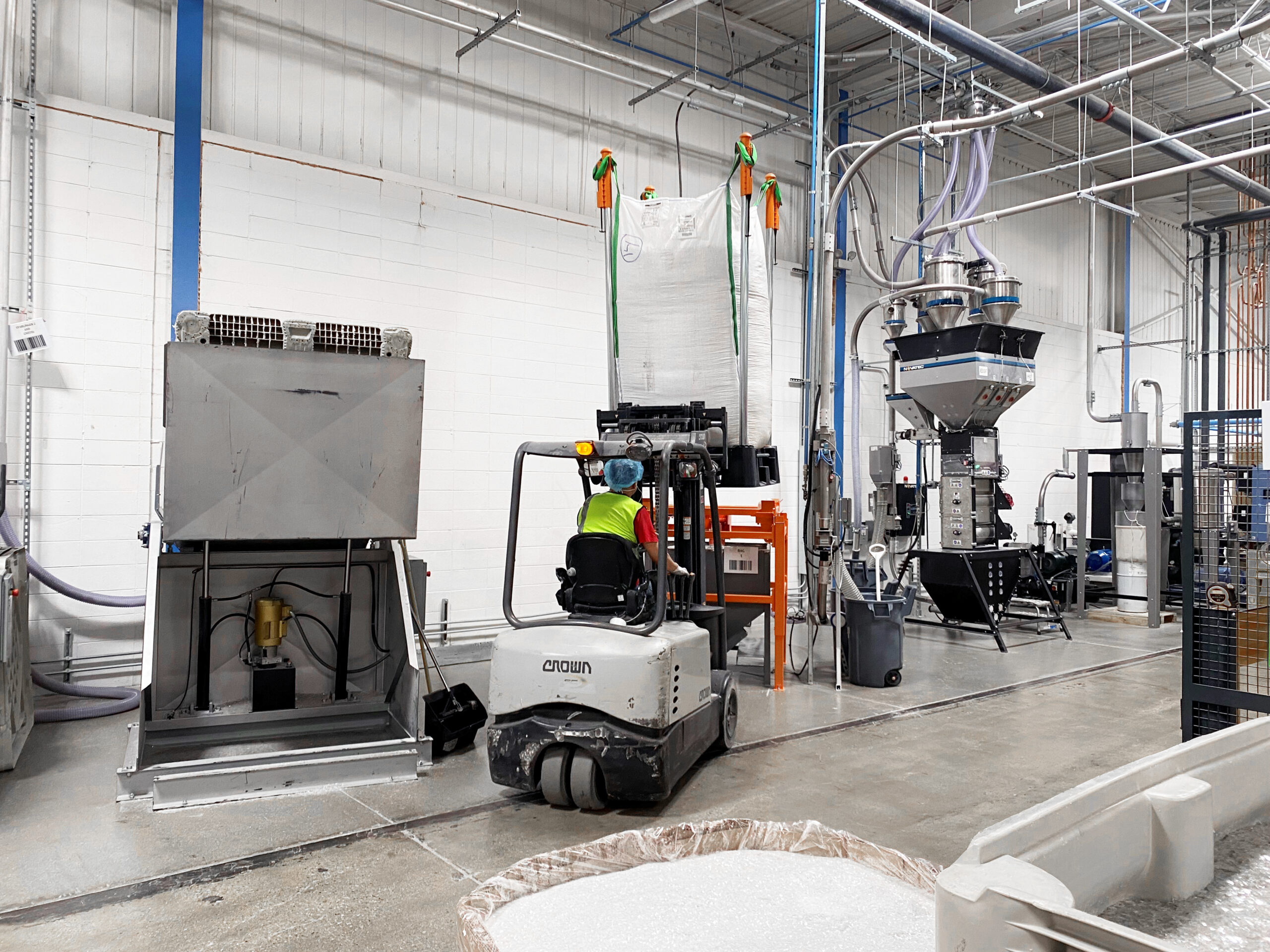
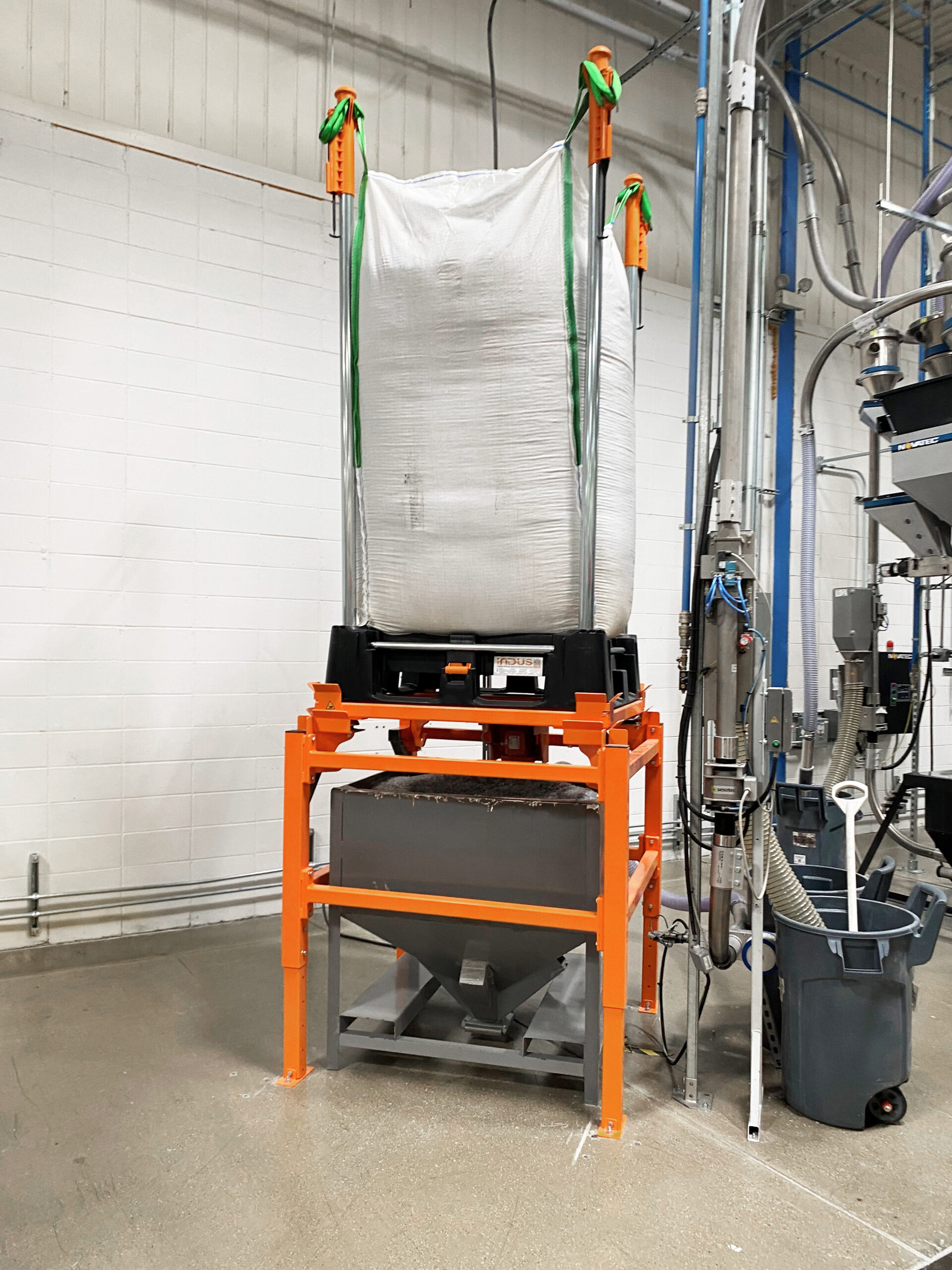
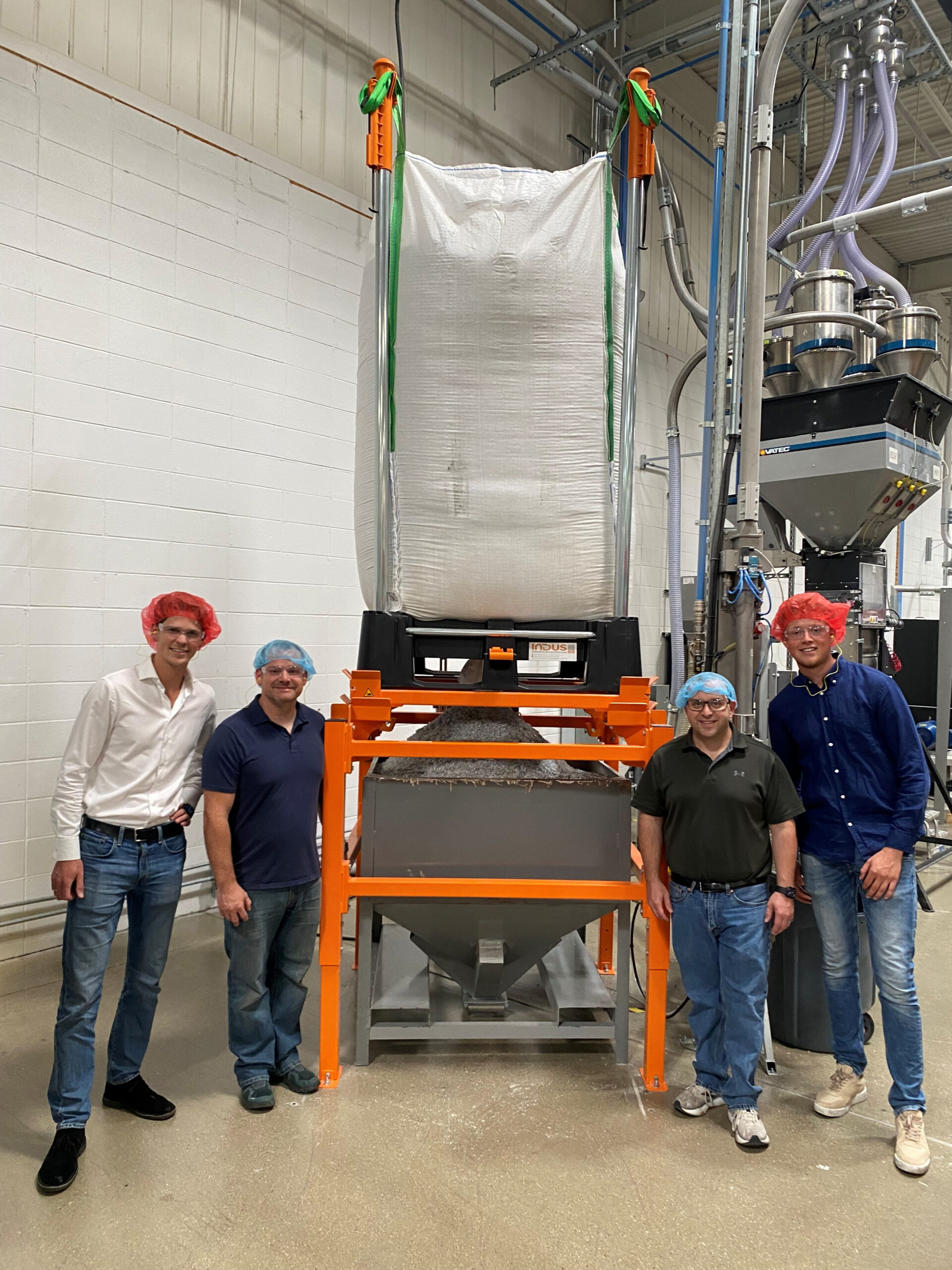
Indus supplied Mercury with NEVA Big Bag Carriers and a NEVA Big Bag Unloading Station. Instead of relying on single-high pallet storage and a large gantry unloading setup, Mercury can now store, move and unload Super Sacks within the same modular NEVA system.
The system integrates directly into the existing operation:
- Super Sacks are placed on the NEVA pallet system once.
- The loops are secured to the supporting poles.
- Forklifts move and stack the systems directly.
- The Carrier is placed onto the unloading station in one move.
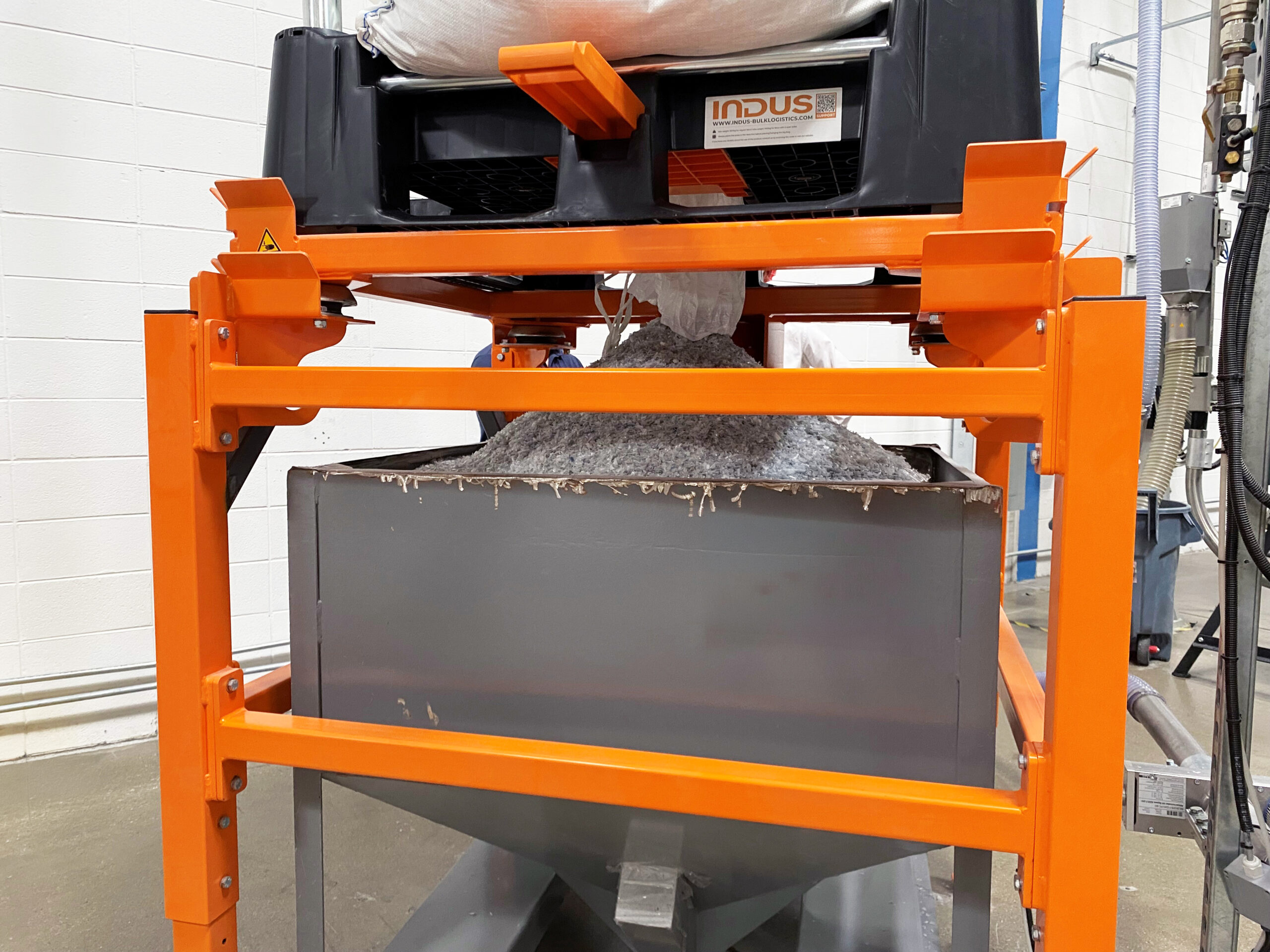
- The operator opens the bag from ground level.
- No fixed racking, gantry system or warehouse reconstruction is required.
This creates more value-added time in production. Preparation can be done offline, when labour is available, while the active production team can feed material faster with fewer manual touches. Compared with the old gantry setup, the NEVA Unloading Station is easier to install, commission, operate and maintain.
“The unloader is simple in the best way. It was easy to install, easy to adapt, and the operators understood it almost immediately.” Todd Kearns
The Result
More Capacity, Faster Unloading and Less Pressure on Warehouse Space
The NEVA system helped Mercury improve both storage density and production efficiency without changing the warehouse layout. By stacking Super Sacks in multiple levels, Mercury increased storage capacity for this material stream. In the first implementation phase, 43 pallet positions were freed up.
This extra space helps Mercury rebalance the warehouse. The company can keep the raw material volume needed for production, while using more space for finished goods. That gives the sales and operations teams more flexibility to serve customers faster when demand increases.
Unloading also became significantly faster. Mercury estimates that the NEVA Unloading Station reduced Super Sack unloading time by approximately 75% compared with the previous gantry method. At the same time, the safety profile improved because operators no longer need to work close to suspended bags. Once the Super Sack is in the NEVA system, it is handled from below, creating a more stable process with less potential energy.
Key outcomes:
- 43 pallet positions freed up in the first implementation phase.
- Approximately 75% faster Super Sack unloading than the previous gantry method.
- Fewer manual touches from storage to unloading.
- More production time recovered for value-added work.
- Safer handling, with operators no longer working next to suspended bags.
- No spills, punctures or material loss recorded with the NEVA system.
- More room for finished goods while maintaining raw material availability.
- Reduced pressure to use short-term warehouse leases.
“Systems like NEVA help us use the Super Sack storage space we already have in a smarter way. Sometimes the better answer is not another warehouse, but rethinking the space inside your own operation.” David Goldman, Director of Materials Management Group at Mercury Plastics