
The Challenge
Building an Efficient Grain Supply Chain from Field to Bakery
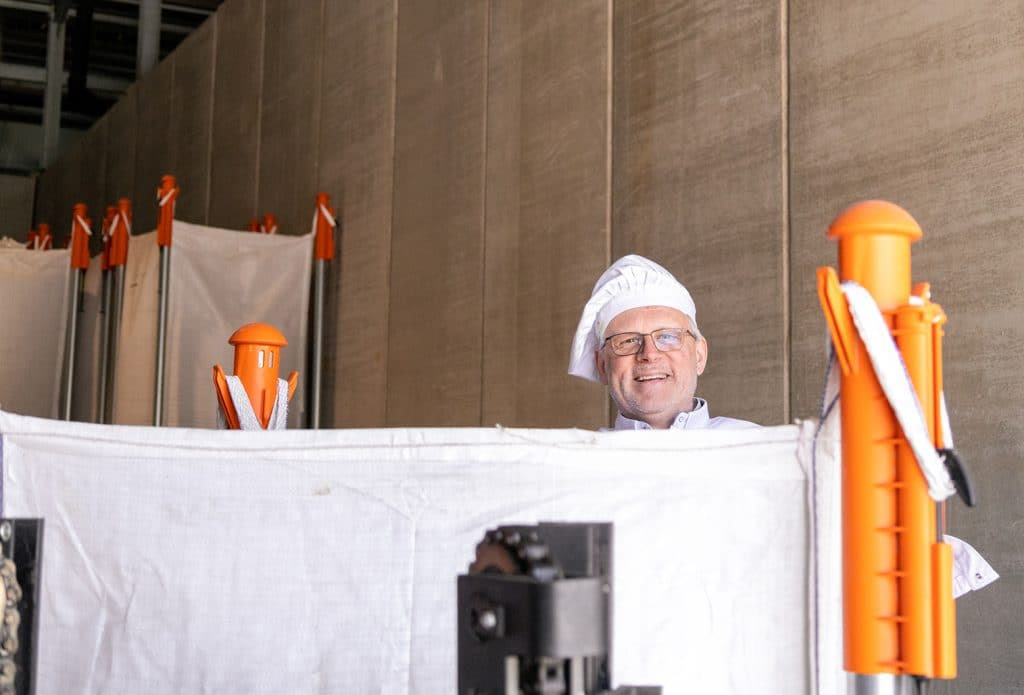
Bakery Van Eeckhout, a third-generation Belgian bread maker with 80+ years of tradition, controls every step of their process—from selecting seeds and farmers to grinding grain and baking bread. This full ownership creates both pride and logistical complexity.
As their supply chain grew, so did their storage and handling challenges:
- Tons of grain arrive directly from farmers’ fields during harvest.
- Traditional solutions like metal bins or stacking loose big bags proved inefficient, bulky, and hard to manage.
- Large silos required intensive cleaning and air systems to empty, adding time and cost.
- Grain storage also demands proper ventilation—without it, moisture fluctuations can spoil a batch in just 12 hours.
The bakery needed a flexible, food-safe, space-saving system that could handle everything from field harvest to mill delivery while protecting product quality.
The Indus Solution
A Unified System from Field to Mill
Van Eeckhout discovered Indus Neva through one of their farmers in Wallonia. After testing a few demo units, they quickly scaled up—starting with 100 Nevas and adding another 75 the following summer.
Here’s how Neva transformed their process:
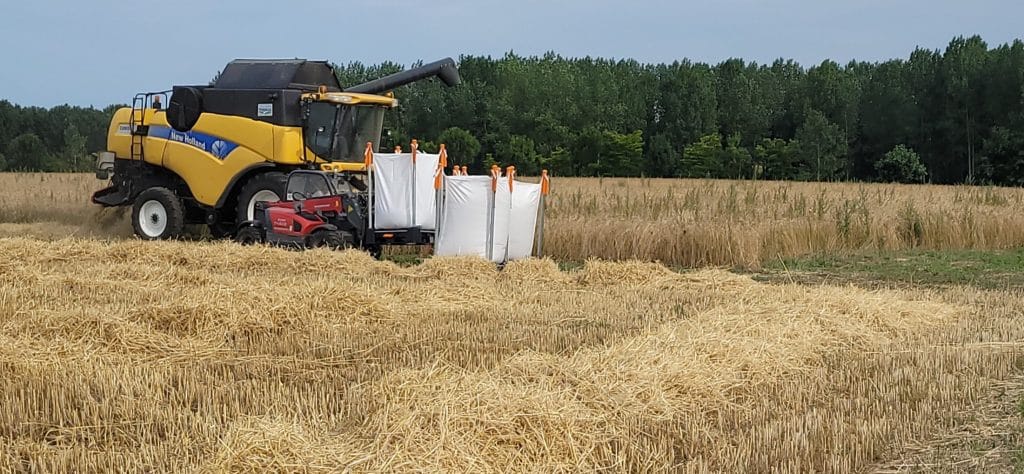
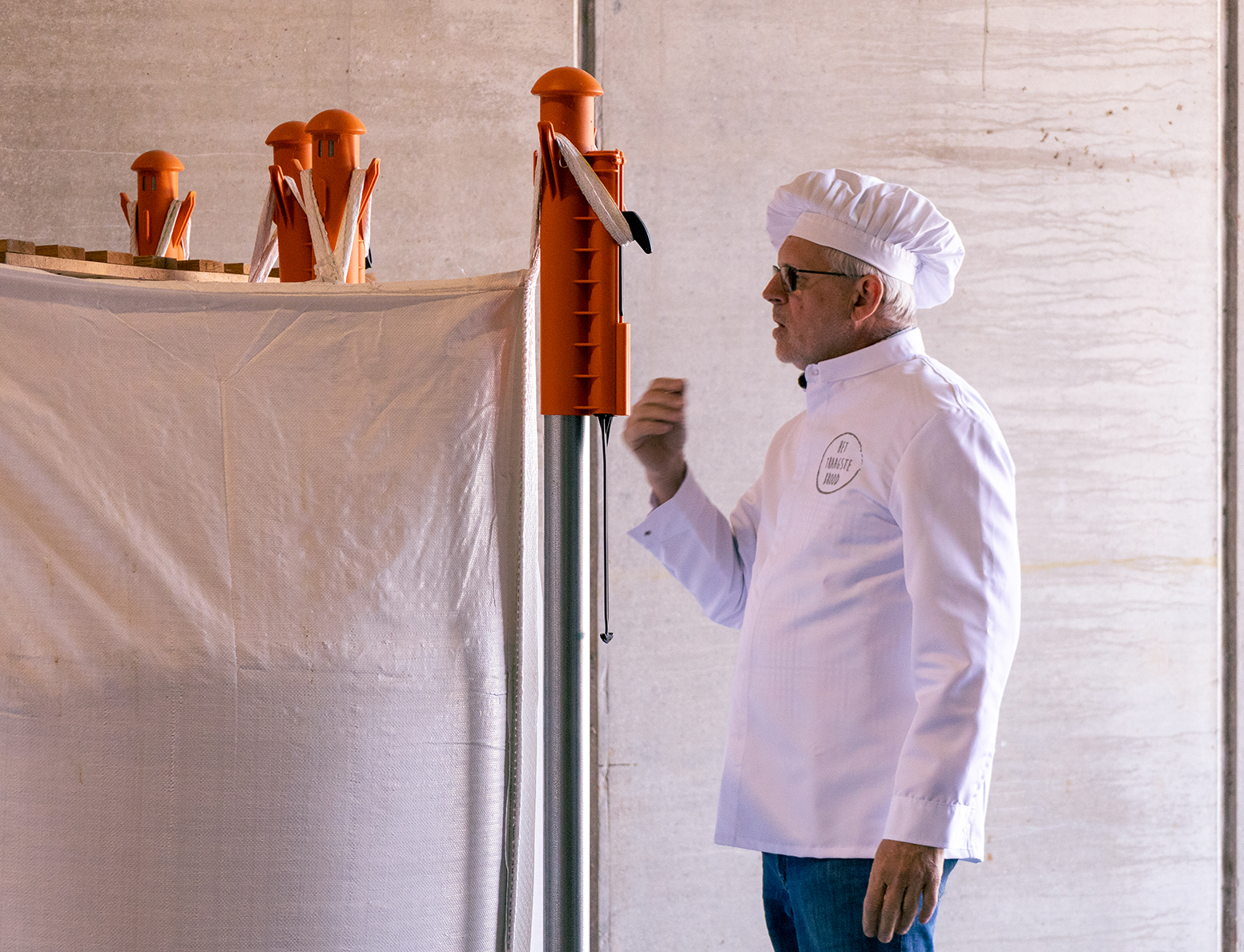
- Direct transfer from the combine harvester into big bags secured in Nevas—right on the field.
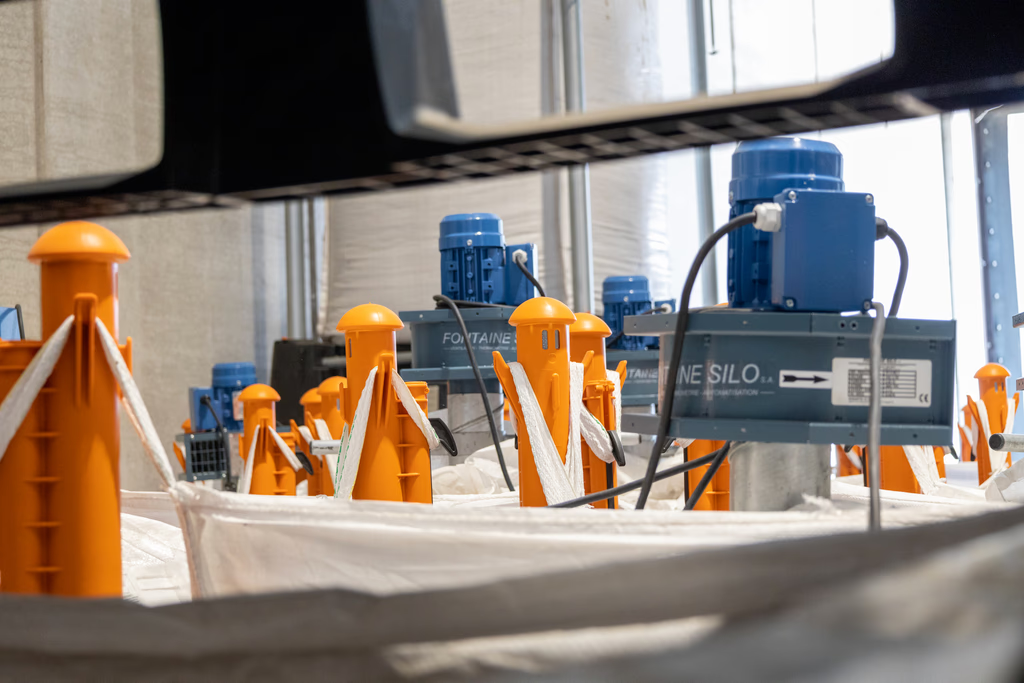
- Grain stacked three-high in storage, building a 6-meter-high grain wall that saves 60% of space.
- Nevas move seamlessly from field to storage to mill—ensuring one way of working across the supply chain.
“From the field to storage and to the mill: we use the same solution for everything,” says Marc van Eeckhout.
Ventilation per big bag prevents moisture build-up, protecting grains from spoilage. Unlike silos, which require thorough cleaning, big bags are recycled after use, saving time and reducing the risk of pests or contamination.
Faster, Smarter Emptying
- In the past, semi-fixed 30-ton big bags were offloaded into silos, requiring air systems to empty them.
- With Neva, gravity does the work—simply open the slide at the bottom of the deck.
- Even at slight angles (23 degrees), Neva empties faster and more efficiently than silos, with optional unloading stations for complete flow.

“With the Indus Neva we have been able to make a major efficiency improvement in our processes”
Marc van Eeckhout, Owner
The Result
Fully Flexible and Futureproof
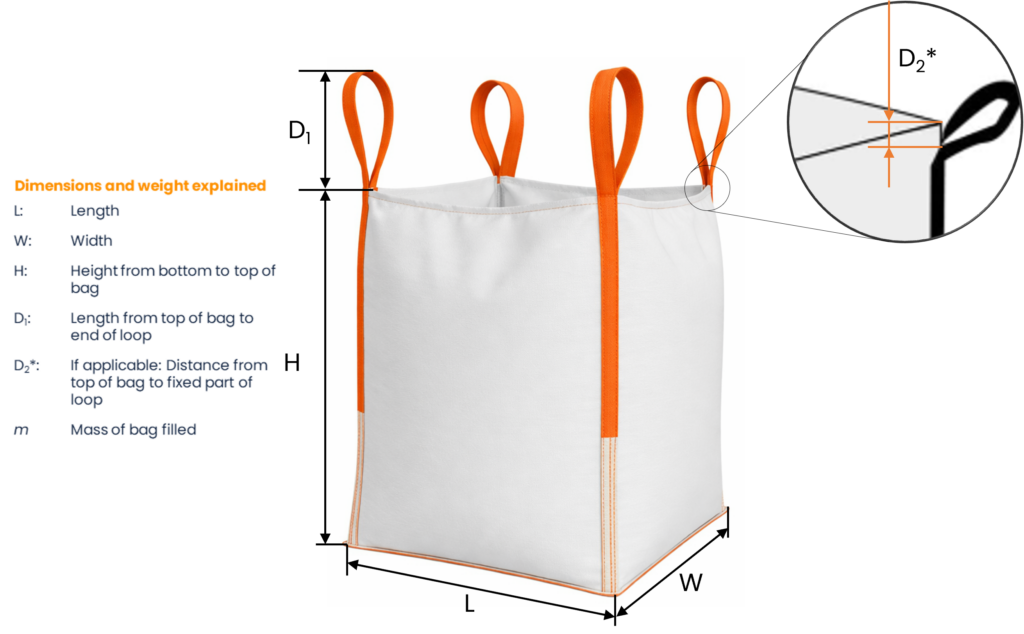
Neva’s lightweight, durable polypropylene design ensures food safety and ease of handling. When empty, Nevas stack compactly—minimizing transport space. Leasing options provided flexibility for Van Eeckhout’s investment cycle, helping them launch their new grain chain with minimal upfront costs.
“Without flexible suppliers like Indus, our start-up would have been impossible. You really helped futureproof our supply chain,” Marc adds.