The Challenge
Outsourced Filling Created Quality Risks
Before implementing the Indus system, Allod had to ship filled big bags to a third-party logistics provider, where the bags were emptied into trucks. This extra step added not only time and cost, but also a quality risk: handling by external parties meant less control over product integrity and contamination potential.
“W
e wanted a simple and reliable way to fill trucks from the top, without complicated conveyors or expensive bulk loading systems. Indus gave us the best solution for our process” Si-Hong Luu, Manager Einkauf
The Indus Solution
Indus Neva Springhead — Modified for Maximum Handling Speed
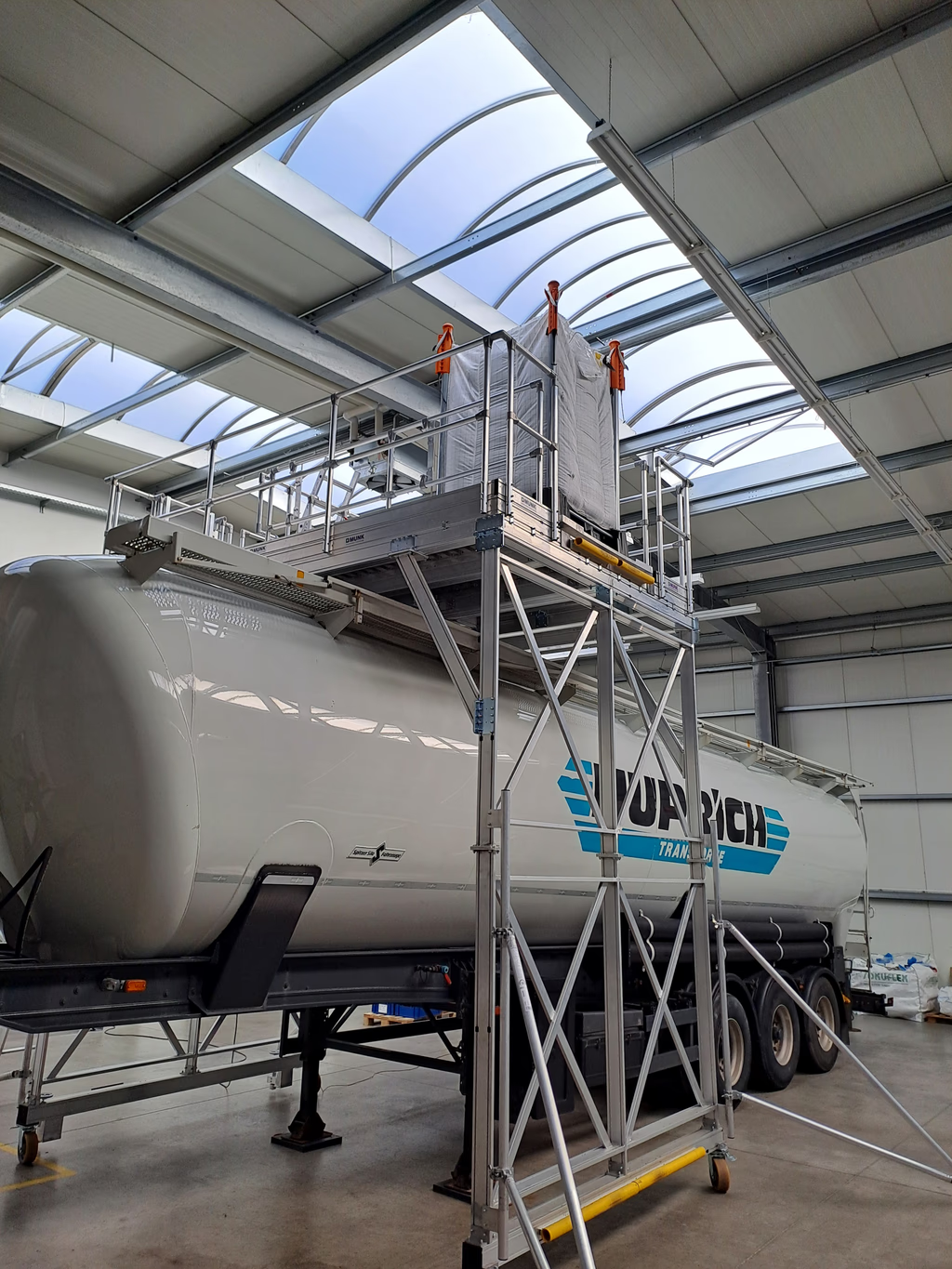
After evaluating alternatives such as expensive bulk truck loaders and complex material conveyors, Allod chose the Indus Neva Springhead with an open sided bottom deck, making it compatible with stacker lifting.
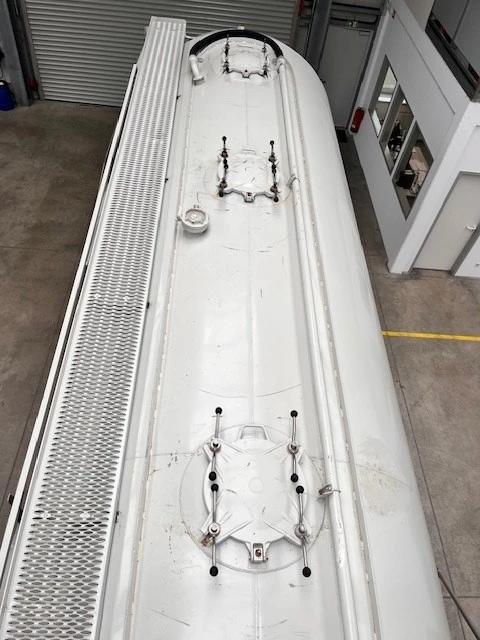
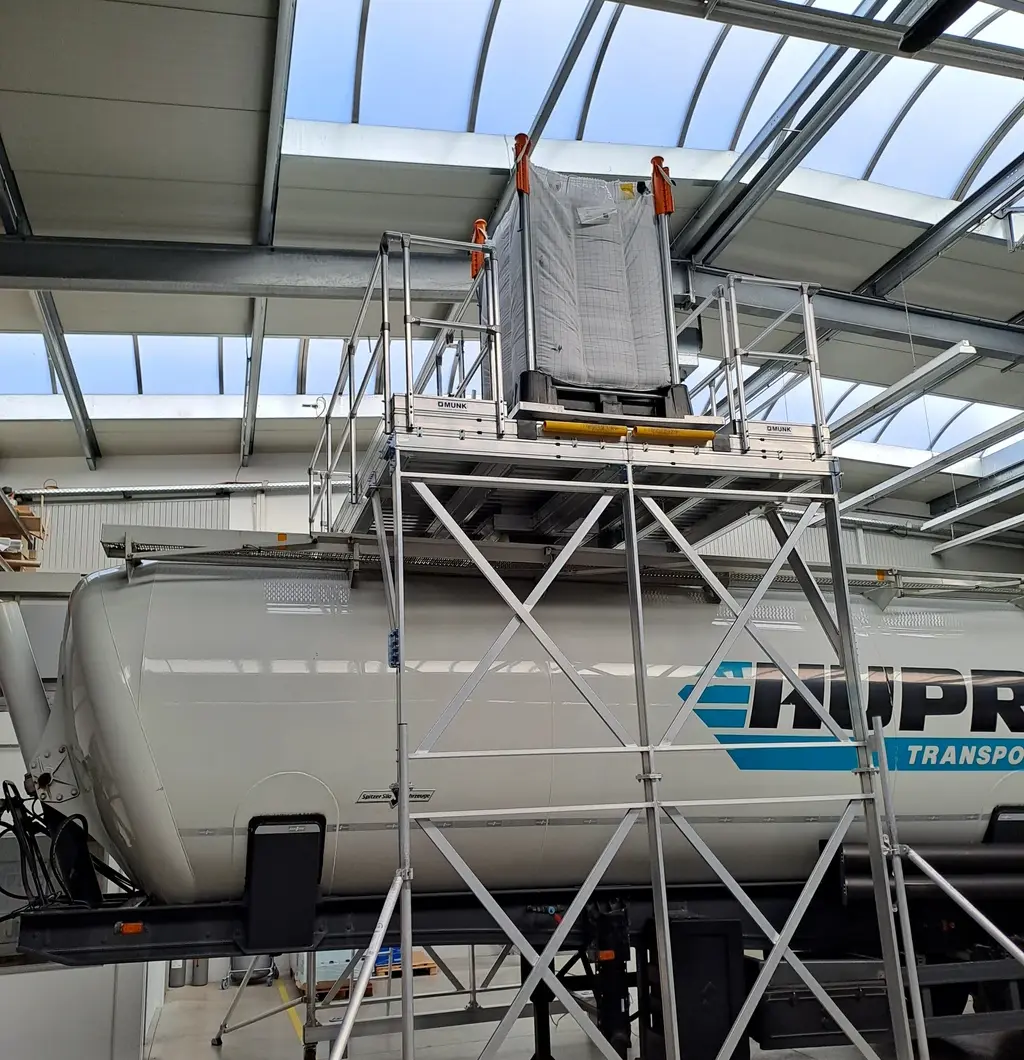
They implemented a custom platform above the truck (see photo) where the Indus system can be placed. When ready, they simply open the slide gate, and material flows directly from the big bag into the silo truck below — a clean, efficient, and safe process.
With 115 Indus Neva systems now in use, this setup allows:
- Big bags to be filled in production
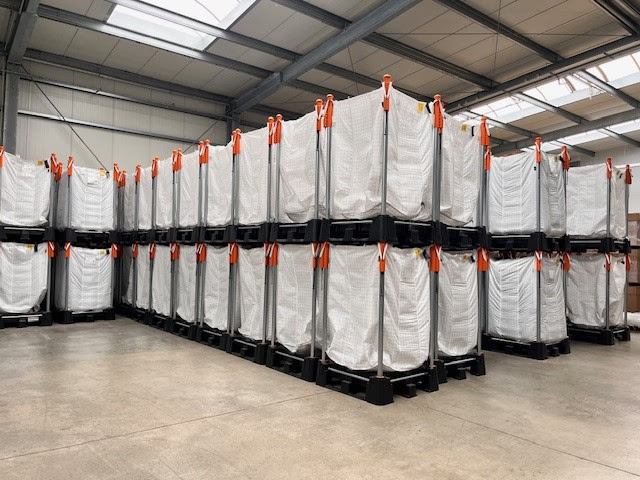
- Neatly stored two levels high in the warehouse using the stackable Indus system. This saves over 60 m² of floor space compared to storing big bags next to each other on the floor. A standard big bag on the floor takes up 1.21 m² (space: 110×110 cm), while Indus systems (120×120 cm = 1.44 m²) can be stacked two levels high — cutting the required footprint almost in half.
- Fast reuse of the system since emptied big bags stay inside and are ready to be refilled without dismantling
Although the system supports compact stacking (by inserting poles into the deck), Allod opted to keep the frames assembled. Why? Because they had the space — and this approach saves them valuable handling time during refilling.
The Result
Full In-House Control & 4-Year ROI
Bringing the big bag filling process in-house eliminated quality concerns which is better for customers. Besides, it significantly reduced handling time. The investment in the Indus system is expected to pay itself back in just four years.
Why it Works
- Tailored design for stacker handling
- Top-down gravity filling directly into trucks
- Clean warehouse organization with stackable frames
- Fewer touchpoints = fewer quality risks
- Time saved = money earned
Thinking of In-Housing Your Big Bag Process?
If you’re still outsourcing your bulk material handling, it may be time to rethink your process — just like Allod did. The right system can bring control, speed, and reliability back in your hands.